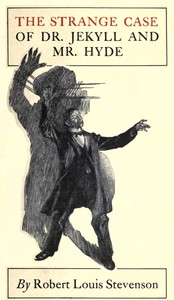
Summary
The lawyer Gabriel Utterson hears from his cousin Richard Enfield about a brutal, unexplained incident: a sinister man named Edward Hyde trampled a young girl in the street and paid off her family with a cheque signed by the respectable Dr Henry Jekyll, Utterson's old friend and client.
Utterson, already troubled by a will Jekyll has made leaving everything to Hyde in case of his death or disappearance, begins quietly investigating Hyde — tracking down his address, confirming his unpleasant, hard-to-describe presence, and worrying privately about blackmail.
A year later, Hyde murders a respected old gentleman, Sir Danvers Carew, in a savage, unprovoked attack witnessed from a distance. Hyde disappears entirely. Jekyll, previously sociable, withdraws from his friends — then briefly returns to his old self, before shutting himself away again, refusing visitors, communicating with his butler Poole only through notes.
Jekyll's old friend Dr Lanyon dies suddenly, leaving Utterson a sealed letter not to be opened until after Jekyll's own death or disappearance. Poole, terrified that someone other than Jekyll is now locked in the laboratory, fetches Utterson; they break down the door and find Hyde's body on the floor, dead by suicide, wearing Jekyll's clothes — and no trace of Jekyll himself.
Two documents close the book: Lanyon's letter, describing in horror how he watched Hyde drink a potion and transform into Jekyll before his eyes; and Jekyll's own long written confession, found in the laboratory, explaining everything from his own point of view.
Jekyll's confession reveals that he developed the potion to separate the respectable and disreputable sides of his own nature, letting "Hyde" act without consequence to Jekyll's reputation. Over time, transformations into Hyde began happening involuntarily, without the potion, and reversing them required steadily larger doses of an ingredient he could no longer obtain in its original, impure form. The confession ends mid-transformation, uncertain whether Hyde will be executed or take his own life — Jekyll calling this moment "my true hour of death."
Literary context
Stevenson (1850–1894) reportedly wrote an early draft of the story in a matter of days during a period of illness, then burned it on his wife's criticism and rewrote it — the surviving text is the product of that rewrite. He was already established as a popular novelist (Treasure Island, 1883) when Jekyll and Hyde made him a household name on a different register entirely.
The book arrived into a late-Victorian culture increasingly interested in ideas of a divided self — contemporary psychology and physiognomy both explored the idea that respectable people might carry a hidden, lesser nature. Stevenson's novella gave that anxiety one of its most durable fictional shapes.
A common misreading treats "Hyde" as simply Jekyll's evil side and Jekyll as simply good. Jekyll's own confession complicates this: he describes himself, before the potion, as already capable of both respectable and "undignified" pleasures, and explicitly calls Hyde a product of only one part of himself, not the whole of his wrongdoing — the text resists a clean good/evil split even as it stages one.
A mystery told from the outside
For most of the book, the reader knows no more than Utterson does: a sinister, oddly undefinable man named Hyde is somehow connected to the respectable Dr Jekyll, and the connection looks sinister. The chapter titles themselves — "Story of the Door," "Search for Mr Hyde," "Incident of the Letter" — read like detective-story chapter headings, because structurally that is what the book is.
This matters for how the "twist" lands: Stevenson is not simply hiding information from the reader for its own sake, but building a structure where the reader, like Utterson, keeps assuming two separate people — making Jekyll's own confession, when it finally arrives, recontextualise everything read before it.
The Carew murder: violence without a clear motive
Hyde's murder of Sir Danvers Carew is witnessed from a distance by a maid, who describes an old gentleman politely approached by Hyde, then suddenly attacked with no apparent provocation — "ape-like fury," trampling the body after it was already still.
The lack of any clear motive is part of the point: whatever Hyde is, his violence is not calculated or purposeful in the way a typical villain's would be — it reads as something closer to appetite finally unrestrained, consistent with how Jekyll later describes him in the confession.
Lanyon's letter: the transformation witnessed
Dr Lanyon's account — written after watching Hyde drink the potion and change into Jekyll in front of him — is the first moment in the book where the reader receives direct, eyewitness confirmation that Jekyll and Hyde are the same person, rather than inference or suspicion.
Lanyon dies not long after, and the text is explicit that the shock of what he witnessed caused his death — the knowledge itself is framed as something the human mind struggles to survive intact.
Jekyll's confession: why he made the potion
Jekyll's own account reframes the entire mystery as a story about himself, told in his own words for the first time. He describes feeling, since young, a gap between his public respectability and private "undignified" pleasures, and developing the potion specifically to let him indulge the latter without risk to the former — not to create a separate evil being, but to free one part of himself from consequence.
This self-justifying framing is worth reading critically: Jekyll presents the experiment as almost reasonable in its original conception, and only gradually admits how much he underestimated what he was releasing.
Loss of control: Hyde without the potion
The confession's most unsettling development is practical rather than philosophical: transformations into Hyde begin happening involuntarily, without Jekyll taking the potion at all — he wakes up as Hyde. Reversing this requires a steadily increasing dose of the drug's key ingredient, and when his original supply runs out, no new batch he can obtain works the same way.
This turns what began as a story about choice and indulgence into one about addiction and loss of control — Jekyll is, by the end, not choosing to become Hyde but failing to stop it.
A confession, not a resolution
The novella ends with Jekyll's confession itself, written as the last of his supply of the drug runs out and he awaits a final, irreversible transformation. He does not know — and says so directly — whether Hyde will die by execution or take his own life; he only knows that writing these words is, for him, "my true hour of death."
The reader already knows, from Poole and Utterson's discovery earlier in the book, that Hyde's body is found dead by apparent suicide, wearing Jekyll's clothes, with no trace of Jekyll himself ever returning. The confession fills in why and how, but the book deliberately never narrates the final moment directly.
Related reading
- The Picture of Dorian Gray — Published the same year as this book's first edition (1890) — both stage a split between a respectable surface and a hidden, worsening truth, one through a potion, the other through a painting.
Main characters
- Dr Henry Jekyll
- A respected physician who develops a potion to separate his own respectable and disreputable impulses into two bodies — and loses control of the separation as transformations into Hyde begin happening on their own.
- Edward Hyde
- The being Jekyll's potion releases: smaller, younger-looking, and capable of violence with no apparent restraint or clear motive, including the unprovoked murder of Sir Danvers Carew.
- Gabriel John Utterson
- The lawyer through whose investigation most of the book is told; his loyalty to his old friend Jekyll, and his suspicion of Hyde, drive the plot until Jekyll's own confession reframes everything he has seen.
- Dr Hastie Lanyon
- An old friend of Jekyll's who witnesses Hyde's transformation into Jekyll firsthand; the shock of what he sees is explicitly described as the cause of his death soon after.
- Mr Poole
- Jekyll's loyal butler, whose growing terror that someone other than his master is locked in the laboratory sets off the book's climax.
- Richard Enfield
- Utterson's cousin, whose account of Hyde trampling a child in the street opens the novella and first connects Hyde's name to Jekyll's.
- Sir Danvers Carew
- A respected, elderly gentleman murdered by Hyde in an unprovoked, witnessed attack that turns the investigation from a private worry into a manhunt.
Main themes
- Duality of human nature
- Jekyll's own confession resists a clean good/evil split — he describes both sides as genuinely part of himself, not Hyde as a purely foreign evil grafted onto a purely good man.
- Respectability and its costs
- The potion exists specifically to let Jekyll indulge impulses incompatible with his public reputation — the novella is as much about Victorian respectability's pressures as about the supernatural premise.
- Loss of control and addiction
- What begins as a controlled experiment becomes involuntary transformation and a desperate, failing search for the original drug's exact ingredients — the mechanics read as closer to addiction than to simple villainy.
- Narrative structure as mystery
- The novella withholds Jekyll and Hyde's identity from the reader for most of its length, using the same investigative structure Utterson follows, so that the final confession recontextualises everything read before it.
- Confession and self-justification
- Jekyll's own written account is the only first-person perspective in the book, and it is worth reading critically — he frames his original choice as reasonable before admitting how badly he misjudged its consequences.
Key passages
Story of the Door (chapter 1)
Enfield tells Utterson about Hyde trampling a child and paying off the family with a cheque bearing Jekyll's signature.
Establishes the Hyde–Jekyll connection as a mystery to be investigated, setting the book's structure before any hint of the real explanation.
The murder of Sir Danvers Carew
A maid witnesses Hyde's sudden, unprovoked, savage attack on an elderly gentleman.
The clearest demonstration of Hyde's violence, notable for its lack of calculated motive.
Lanyon's letter
Lanyon's sealed account, opened after his death, describes watching Hyde drink the potion and become Jekyll before his eyes.
The first direct, eyewitness confirmation in the book that Jekyll and Hyde are a single person.
Jekyll's confession begins
Jekyll's own written account opens by explaining why he developed the potion in the first place.
Reframes the entire mystery from the inside, in Jekyll's own self-justifying voice, for the first time.
Transformation without the potion
Jekyll describes waking up as Hyde without having taken the drug at all.
The turning point where the story shifts from a tale of choice and indulgence to one of involuntary loss of control.
The final lines of the confession
Jekyll writes as his last dose of the drug runs out, uncertain whether Hyde will be executed or take his own life.
The novella's actual ending — a confession written mid-crisis, with the final transformation never narrated directly on the page.
Questions for reflection
Use these to guide your own reading — there are no ready-made answers.
- For most of the book, the reader does not know that Jekyll and Hyde are the same person. How does reading the early chapters differently on a second read — once you know the twist — change what Stevenson seems to be doing structurally?
- Jekyll describes himself as already capable of both respectable and "undignified" impulses before the potion. How does this complicate a simple reading of Hyde as pure evil and Jekyll as pure good?
- Hyde's attack on Sir Danvers Carew has no clear motive. What does the lack of a calculated reason suggest about what the potion actually releases?
- Transformations into Hyde eventually begin happening without the potion at all. How does this shift change what the story is really about — choice, or loss of control?
- The novella never directly narrates the final transformation or death — only Jekyll's confession, written mid-crisis, and the body already found earlier in the book. What is gained by withholding that final moment?
- Jekyll's confession is the only first-person account in the book. How much should a reader trust his own explanation of why he built the potion in the first place?
Read and understand
Read The Strange Case of Dr Jekyll and Mr Hyde in full on ReadPro, free and in your browser — short enough for a single sitting. Whenever Stevenson's Victorian prose or a legal/period term in Utterson's narration slows you down, select it and use Explain for a plain-language reading, without leaving the page.
Once you have read and questioned passages here, you can bring the same approach to a file of your own: explain a PDF, EPUB or text file.